
St Mary's Churchyard, Hendon (Barnet)
Brief Description
There may have been a Saxon church here as early as the C9th, and a carved C11th Norman font is still in use. The current building retains some C13th, C15th and C16th elements but the church was extended substantially in 1914/15. The large churchyard has a number of fine monuments and trees including yew and cedar. In his history of Hendon in 1890 E Evans notes the earliest surviving grave as that of Thomas Marsh, 1624; he describes the churchyard's pretty location and trees shading the graves, a scene little changed today.
Practical Information
- Previous / Other name:
- Hendon Parish Church; St Mary's and Christ Church
- Site location:
- Church End, Hendon
- Postcode:
- NW4 1JX
- What 3 Words:
- farm.after.latter
- Type of site:
- Churchyard
- Borough:
- Barnet
- Open to public?
- Yes
- Opening times:
- unrestricted. Church open Sat 10-12; Sun 3pm - evensong
- Special conditions:
- Facilities:
- Events:
- Recitals
- Public transport:
- Tube: Hendon Central (Northern) then bus. Bus 113, 143, 183, 326.



- Research updated:
- 01/07/2000
- Last minor changes:
- 19/07/2023
Please check with the site owner or manager for latest news. www.hendonstmary.co.uk
Full Site Description
There may have been a Saxon church here as early as the C9th, and a carved C11th Norman font is still in use. There are records that in 959AD land here had been given to monks of Westminster by the Bishop of London. The current building retains the C13th nave, chapel, north aisle and south arcade, with traces of C13th painting on the walls. There is a C15th west tower and early C16th north chapel. Major changes were made in the C20th when the church was extended substantially in 1914/15; the old south aisle was replaced by a larger nave designed by Temple Moor, praised by Pevsner as 'one of the rare cases in which a Gothic revival architect, by respecting old work and adding frankly new work to it, has considerably enriched the original effect'. Among the monuments in the church is a small brass to John Downer, a baby who died in 1515; the tomb of Sir Jeremy Whichcot (d.1677) who had lived at Hendon House, later the site of Hendon County School; memorial to Sir Thomas Stamford Raffles, founder of Singapore, who lived on Highwood Hill in the last months of his life.
The churchyard has a number of fine monuments such as that of Abraham Raimbach who was engraver for the painter David Wilkie and his tomb features a pelican; James Parsons, an C18th antiquarian and physician; Thomas Woolner whose low tomb has a mallet and modelling tools; Emily Patmore, wife of Coventry Patmore who wrote for her his poem 'The Angel in the House'; Nathaniel House one of the original members of the Royal Academy; a neo-classical sarcophagus with an urn for Theodore Brinckman of Hanover (d.1741); tomb in the style of an Egyptian temple to Philip Rundell (d.1827) and a square pedestal with moulded cornice for Henry Joynes, architect (d.1754). Edward Longmore, a famous giant, was buried here in 1777. In his history of Hendon in 1890 E Evans notes the earliest surviving grave as that of Thomas Marsh, 1624; he describes the churchyard's pretty location and trees shading the graves.
The churchyard abuts Church House Museum grounds (q.v.) and looks across Sunny Hill Park (q.v.), the south east tip of which was once part of the churchyard land. Bram Stoker used the churchyard as a location in 'Dracula'. The large churchyard looks over an iron fence to the countrysidof Sunny Hill Park beyond. It has numerous tombs and memorials in the grass, which is long in parts, and some fine trees including cedar and yew, with paths running through it. At the front of the church are well-kept lawns and flower beds. Among the listed tombs is that of Susannah Frye (d.1739) and Sir Joseph Ayloffe (d.1781).
Sources consulted:
Bridget Cherry & Nikolaus Pevsner, The Buildings of England: London 4: North (Penguin, 1998); Arthur Mee 'The King's England: London North of the Thames except the City and Westminster' (Hodder & Stoughton Ltd) 1972
Further Information (Planning and Conservation)
- Grid ref:
- TQ228895 (522890,189600)
- Size in hectares:
- Site ownership:
- Diocese of London
- Site management:
- Church
- Date(s):
- probably C9th on
- Designer(s):
- Listed structures:
- LBII*: St Mary's Church. LBII: 9 tombs: Conquest Jones, Henry Joynes, John Haley, John Jones, Sir Joseph Ayloffe, Susannah Frye, Thomas Thatcher, Philip Rundell Mausoleum, unidentified chest tomb
- On National Heritage List for England (NHLE), Parks & Gardens:
No- Registered common or village green on Commons Registration Act 1965:
No- Protected under London Squares Preservation Act 1931:
No
Local Authority Data
The information below is taken from the relevant Local Authority's planning legislation, which was correct at the time of research but may have been amended in the interim. Please check with the Local Authority for latest planning information.
- On Local List:
- No
- In Conservation Area:
- Yes
- Conservation Area name:
- Church End Hendon
- Tree Preservation Order:
- Not known
- Nature Conservation Area:
- Yes - Local Importance
- Green Belt:
- No
- Metropolitan Open Land:
- No
- Special Policy Area:
- No
- Other LA designation:
- Article 4 Direction
Photos

St Mary's Church, July 2000. Photo: S Williams

2000 
2000 
2000 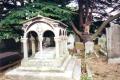
2000 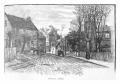
1886 
Click a photo to enlarge.
Please note the Inventory and its content are provided for your general information only and are subject to change. It is your responsibility to check the accuracy.